
Steve McQueen's Closet, Reconsidered
There has been, for the better part of fifteen years, a quiet and well-funded conspiracy in men's fashion to sell you Steve McQueen back to yourself. He is, by some measure, the most reanimated man in the industry. Every spring lookbook for a decade has put a brown leather jacket over a chambray shirt and called it heritage. Every watch ad that wants to feel a little dangerous reaches for a Heuer. And somewhere in Brooklyn, right now, a thirty-two-year-old in a Belstaff Trialmaster is paying for the privilege of feeling, for one Saturday afternoon, like a man who could fix his own carburetor.
He cannot, of course. Most of us cannot. That is the first thing you have to admit before any of this gets useful.
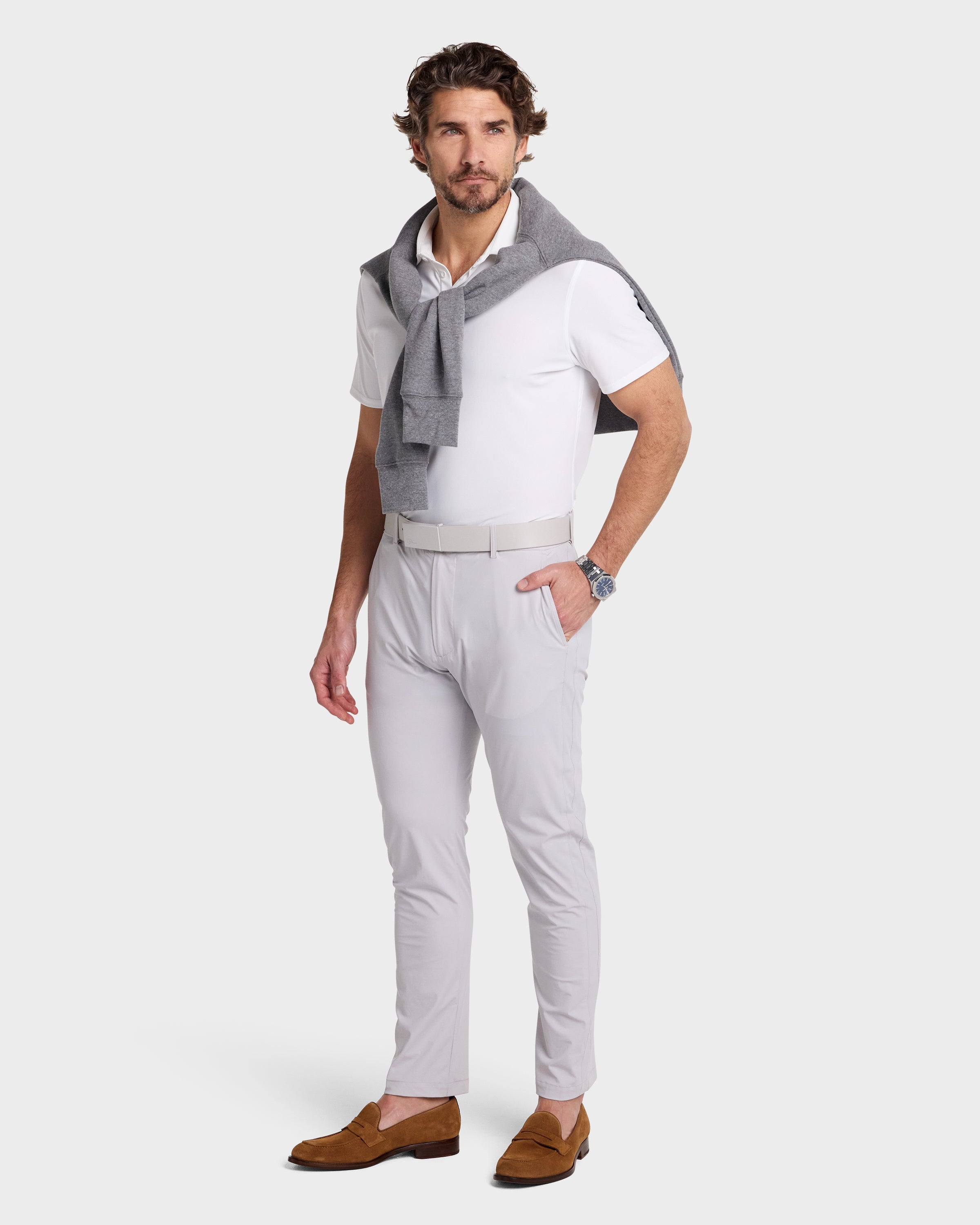
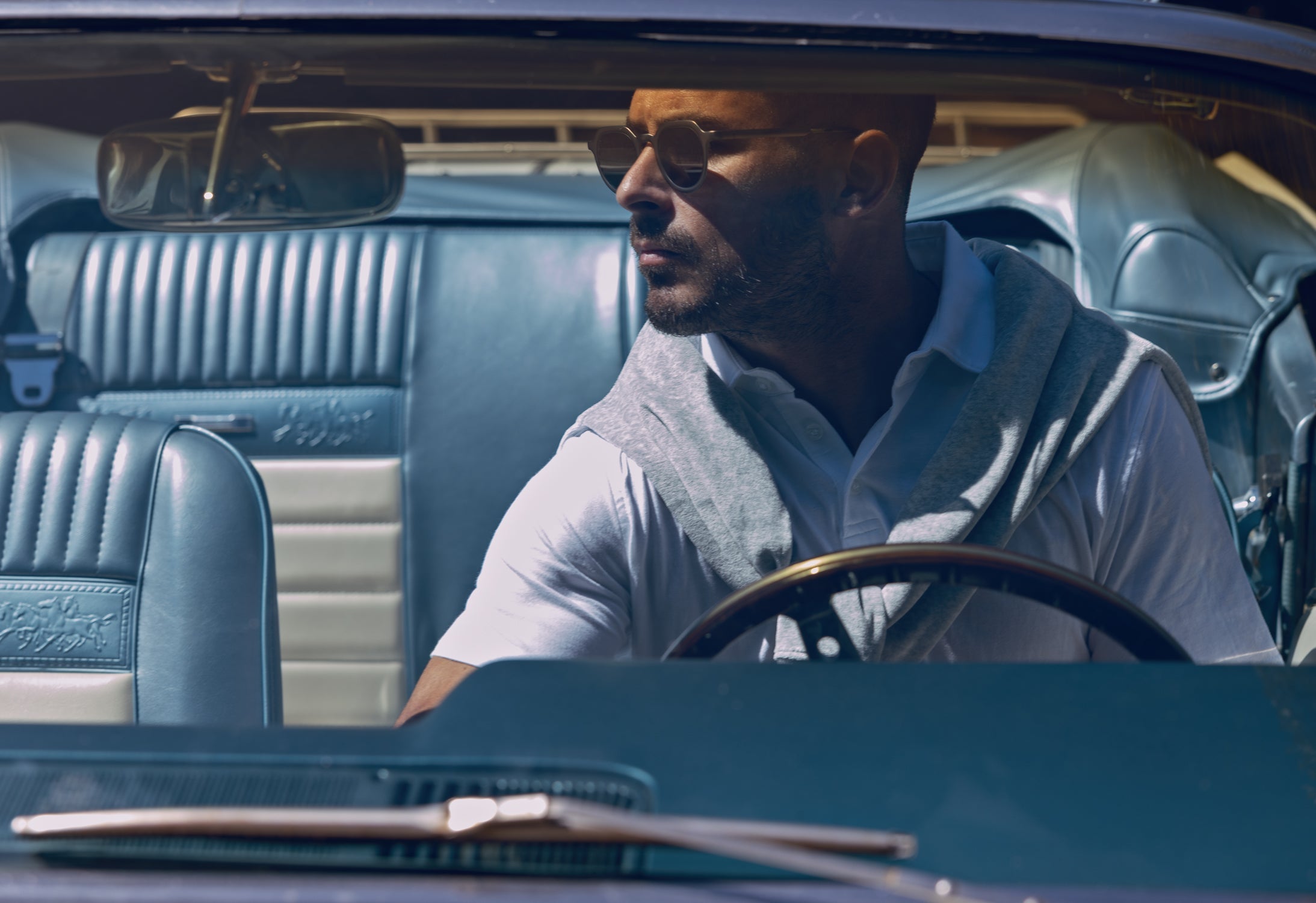
What we get right, in our endless McQueen revivalism, is mostly the surface. The palette is correct: dust, oxblood, faded khaki, the navy of a sweater washed enough times to forgive. The silhouette is mostly correct, too — short jackets, lean trousers, a refusal of bagginess that still allows for movement. The Persol 714s, in their folding case, have made it back to the bridge of every well-dressed nose in the better neighborhoods of every coastal city. So far, so good.
What we get wrong is everything underneath.
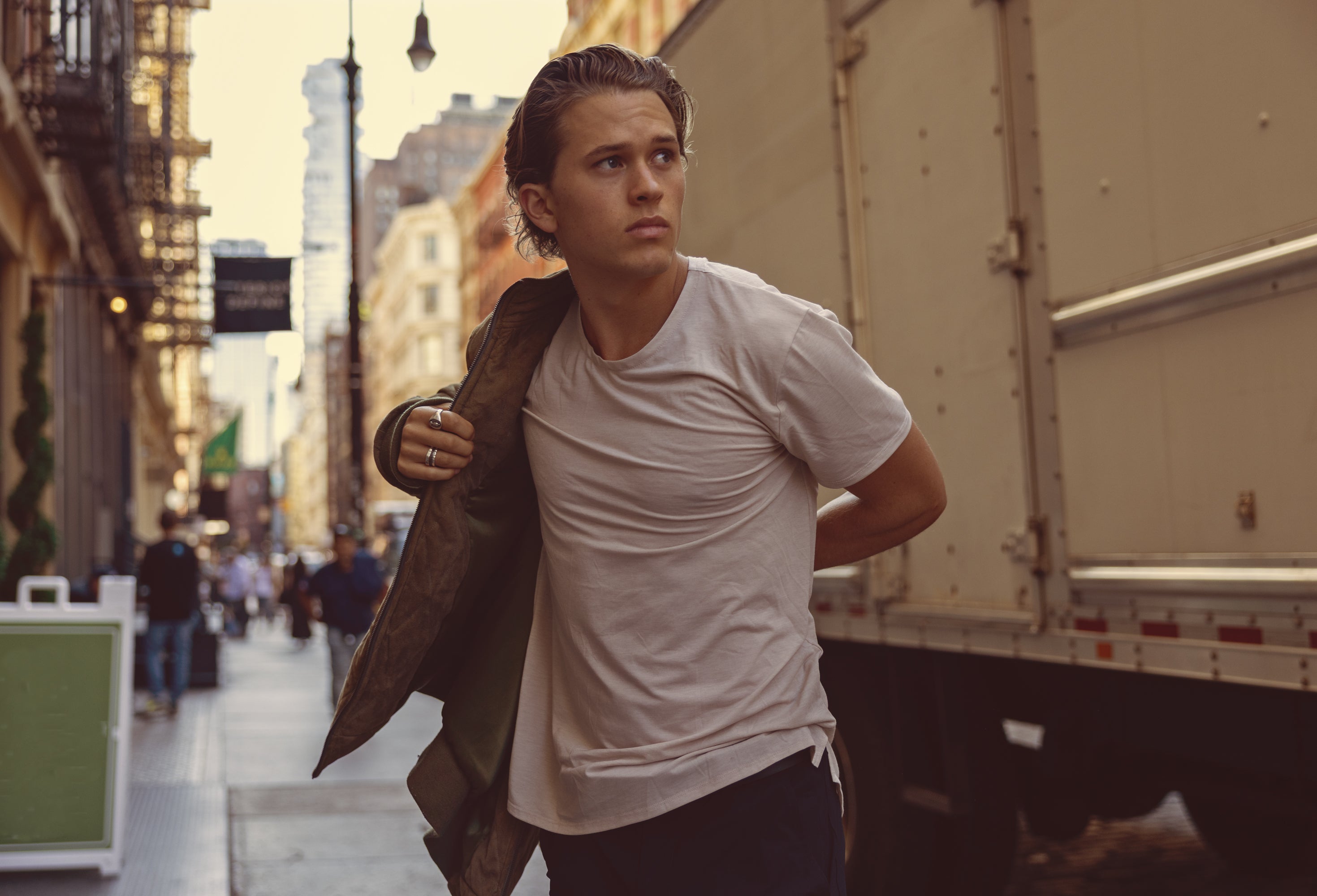
The first wrong is the cleanliness. Look closely at any photograph of McQueen off-set — at the ranch, in the desert, on a bike — and the clothes are not pristine. They are beaten. The Baracuta has been worn through three winters. The chinos have an oil stain near the right knee. The white T-shirt has gone the color of an old napkin. The clothes have been used, which is what clothes are supposed to be, and the result is a man who looks like he wandered into the frame rather than was placed there. The modern revival, by contrast, takes the same garment and presents it like a museum piece — selvedge intact, leather unscarred, every fold pressed into a kind of quiet hostility. We are buying the silhouette of a working life without the working life to scuff it up. The result, more often than not, reads as costume.
The second wrong is the function. McQueen wore what he wore because it did something. The Trialmaster shed gravel. The Monaco kept time underwater. The Persols folded into a glove compartment without snapping. The garments were tools, and the tools happened to be beautiful. Today the order is reversed: we buy the beauty and pretend the function. A man in a fourteen-hundred-dollar motorcycle jacket who has never been on a motorcycle is wearing, technically, a costume. He is also missing the entire point. Function was not incidental to McQueen's style — it was the engine of it. Take the function out and you are left with a series of well-photographed objects, which is what the industry has been selling, which is fine, but let us not pretend it is the same thing.
The third wrong, and the hardest to see, is the relationship. McQueen was photographed an enormous amount, and yet the photographs feel found rather than made. You get the distinct sense, in nearly every one, that he was not thinking about being photographed — he was thinking about the bike, the engine, the clock, the road, the dog at his feet. The clothes were, to him, a kind of weather: present, considered, never the subject. The modern revivalist has reversed this, too. We dress as McQueen and then announce it. We post the watch from a wrist angle that took four tries. We tag the brand. We are not wearing the clothes; we are wearing them at the camera. Style, in the McQueen mode, was a byproduct of having something else to do. Strip away the something else and you are left with what we have now, which is a generation of men dressed for a movie they are not in.
The lesson, then, is not to throw out the wardrobe. The wardrobe is good. The Persols still fold. The Baracuta still works. The chinos still hold up to a long Saturday. The lesson is that the clothes are the easy part. The hard part — the part you cannot buy — is having a life that wears them in. Get a hobby that ruins a pair of pants. Drive something. Fix something, badly. Spend an afternoon doing a thing that does not photograph.
Then put the jacket on and don't think about it.
That, more than the jacket itself, is the closet worth stealing.